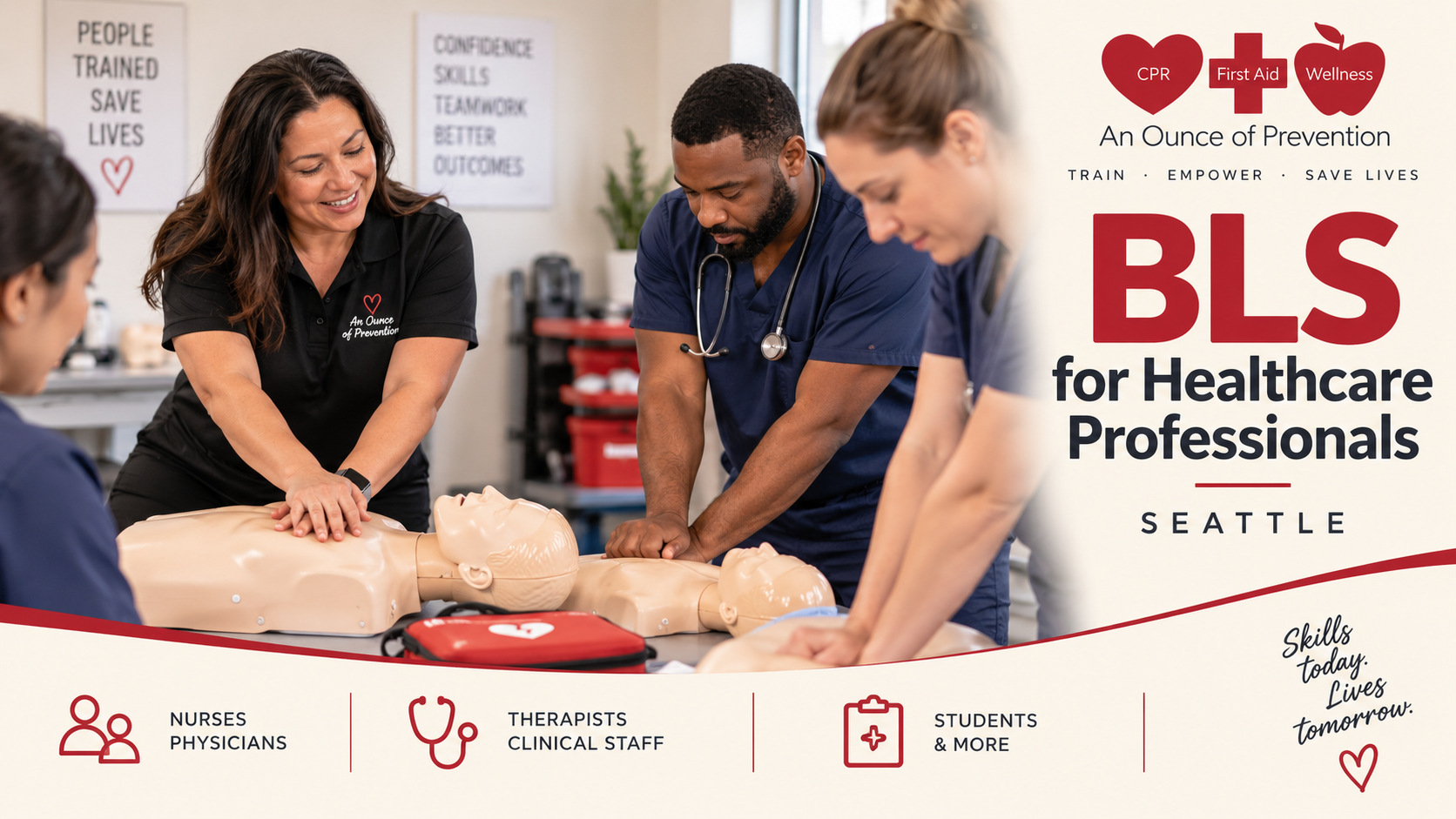
If you’re a nurse, physician, therapist, medical assistant, dental professional, EMT, paramedic, healthcare student, or other healthcare professional, you’ve probably heard the letters BLS.
But what exactly will you learn in a BLS course? Is BLS different from a basic CPR class? And most importantly—is BLS the course you actually need?
Let’s find out.
What You’ll Learn
By the end of this article, you’ll be able to determine whether American Heart Association BLS training is appropriate for your professional, employment, school, or clinical training needs.
Along the way, you’ll learn to:
- Identify the core skills practiced in healthcare BLS training.
- Explain why hands-on practice matters when developing and maintaining BLS skills.
- Determine whether BLS may be required for your healthcare role, employment, education, or clinical placement.
- Identify what you should verify before selecting and registering for a BLS course.
What Do You Learn in Healthcare BLS?
BLS prepares healthcare professionals to recognize and respond to life-threatening emergencies.
Training includes skills such as:
- High-quality CPR for adults, children, and infants
- Recognition of cardiac arrest
- Early use of an AED
- Effective ventilations
- Bag-mask ventilation
- Relief of foreign-body airway obstruction
- Working effectively as part of a resuscitation team
These are physical skills, which is why BLS training isn’t only about knowing the correct answer on a test.
You need an opportunity to perform them.
Did You Know?
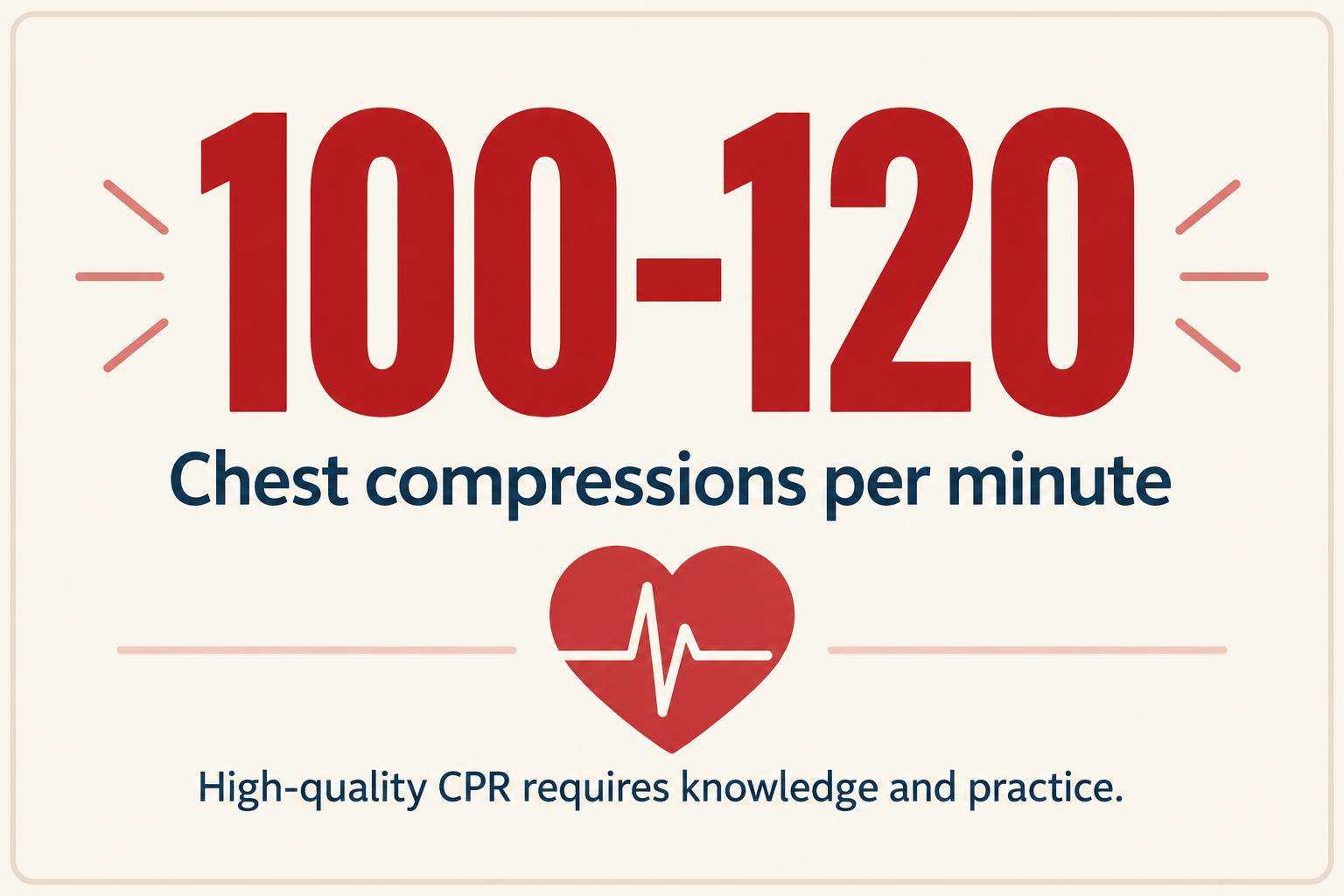
100–120
That’s the recommended rate of chest compressions per minute when performing high-quality CPR on an adult.
But compression rate is only one part of performing high-quality CPR.
You also have to consider compression depth, chest recoil, interruptions in compressions, ventilation, and other components of an effective resuscitation.
That’s where practice becomes important.
Why Does Hands-On Practice Matter?
There’s a difference between recognizing the correct answer and physically performing a skill.
During BLS training, hands-on practice allows you to work on the physical components of CPR and other lifesaving skills.
You can practice compressions.
You can practice ventilations.
You can use an AED trainer.
You can practice coordinating with other rescuers.
And you can receive feedback and make corrections.
The objective isn’t simply to know what to do.
It’s to develop your ability to do it.
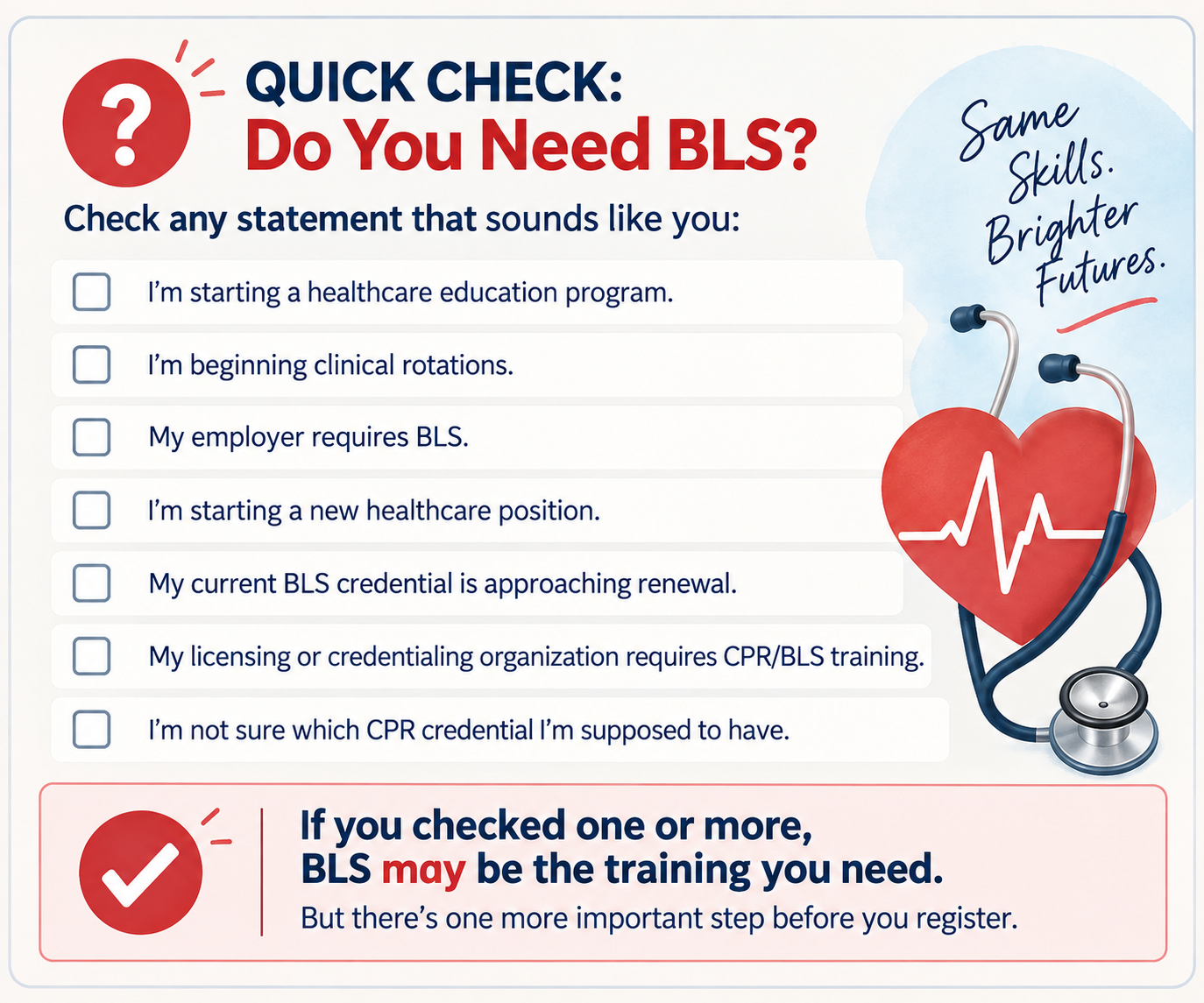
Before You Register: Check Your Requirement
Not every CPR course provides the same credential.
Healthcare professionals and students may have specific requirements established by an:
Employer • School • Clinical Program • Licensing Organization • Credentialing Organization
Before choosing a course, find out exactly what they require.
Ask:
Do I specifically need American Heart Association BLS?
Don’t assume that every CPR course will satisfy a healthcare employer or school’s requirement.
Once you know the exact credential required, you can select the appropriate course.
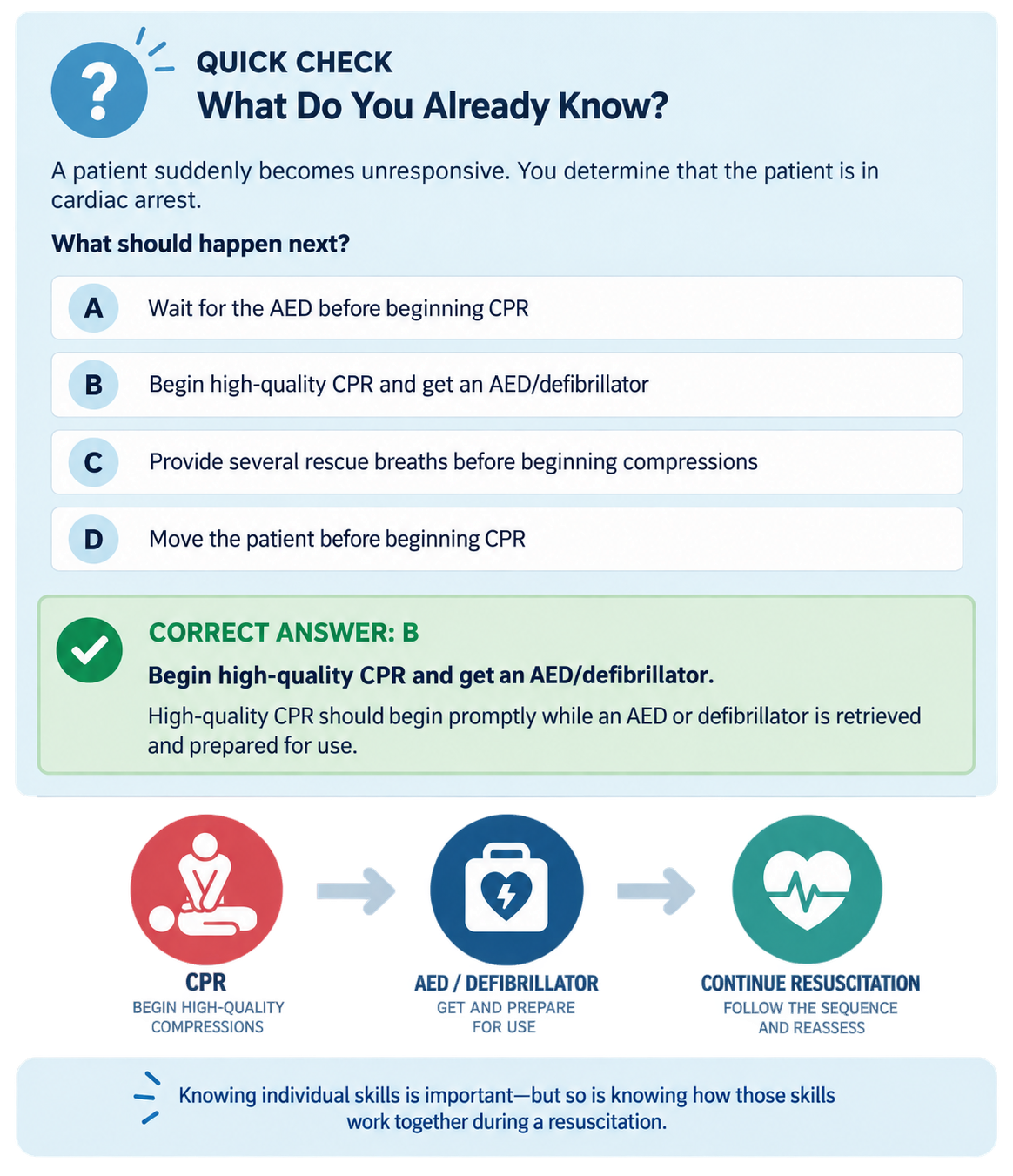
Final Knowledge Check
Let’s see if you can apply what you’ve learned.
1. Name two skills you may practice during BLS training.
Think of your answer before continuing.
Examples include CPR, AED use, bag-mask ventilation, infant or child CPR, choking response, or team resuscitation.
2. Why is hands-on practice an important part of BLS training?
Because recognizing what to do and physically performing the skill are different. Practice provides an opportunity to perform the skill, receive feedback, and make corrections.
3. What’s one thing you should do before registering for a BLS course?
Confirm the exact CPR/BLS credential required by your employer, school, clinical program, licensing organization, or other organization requiring the training.
If you got those, you’ve met the objective of this article.
Need BLS for Work, School, or Clinicals?
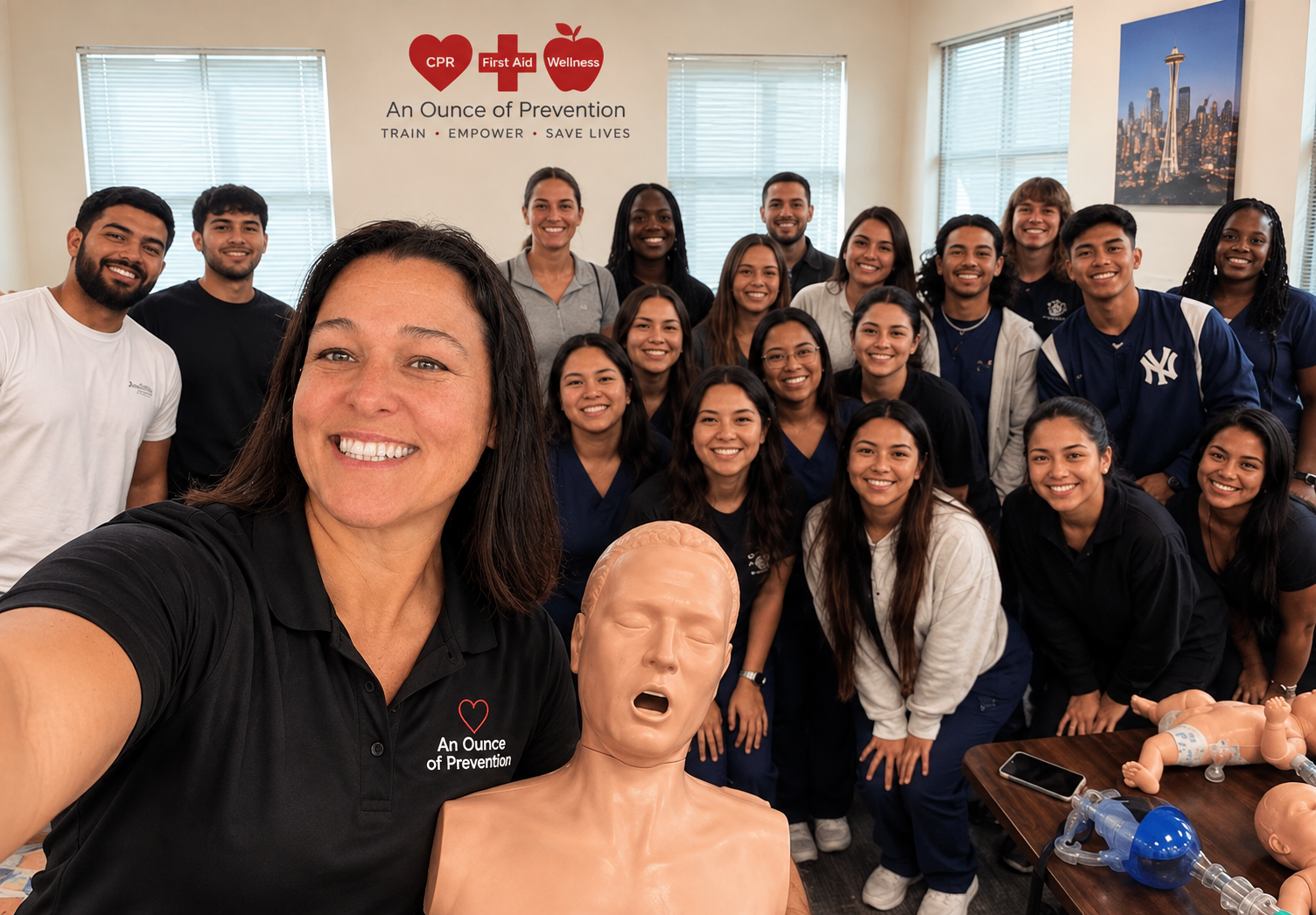
If you’ve confirmed that you need American Heart Association BLS, An Ounce of Prevention offers BLS training for healthcare professionals and students in the Seattle area.
Questions? Texting is the easiest way to reach me.
Text Marlo: 206-790-0743
Email: marlo@acprclass.com
Choose a class date and time that works for you and get your BLS requirement taken care of.